
5 Key Takeaways
- A 24/7 SOC ensures continuous monitoring and rapid threat detection.
- Real-time threat response effectively minimizes damage and prevents security breaches.
- SOC teams analyze, investigate, and contain threats before escalation occurs.
- Advanced tools and human expertise together strengthen overall cybersecurity defense systems.
- Outsourced SOC services provide scalable, cost-effective, and expert security solutions.
24/7 Security Operations Center
A 24/7 SOC is the backbone of modern cybersecurity, designed to detect, analyze, & neutralize threats in real time. Businesses today operate in an environment where cyberattacks are relentless. That is why rapid threat response has become essential—not optional. From phishing to ransomware, threats can infiltrate a network at any time. A SOC provides continuous system visibility, empowering swift decisions & immediate containment. Rather than responding after harm, organizations with a 24/7 SOC remain proactive, mitigating risks, ensuring compliance, and safeguarding sensitive data around the clock.
Understanding the Purpose of a 24/7 SOC
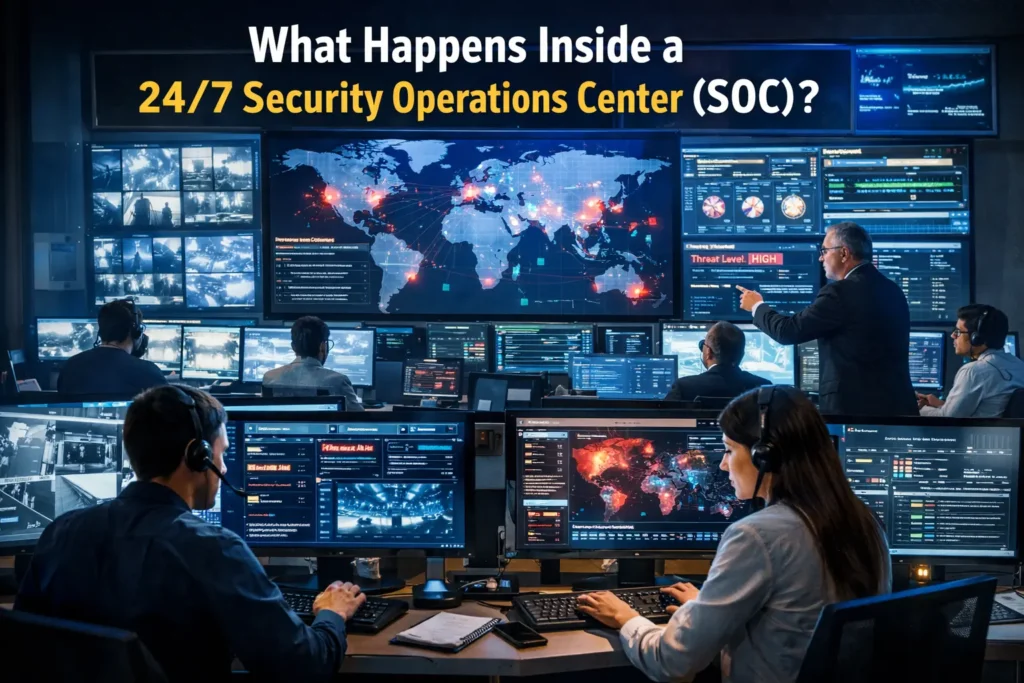
A Security Operations Center is more than a room of screens—it is a disciplined environment where cybersecurity is proactively managed. Its chief mission is to relentlessly monitor, detect, investigate, & counter threats.
Organizations depend on SOC teams to guard their digital assets at all times. This includes protecting customer data, intellectual property, and internal systems. In risk-prone regions like Southern California, where digital businesses are booming, maintaining robust cybersecurity is imperative.
Key Functions of a SOC:
- Continuous monitoring of networks and endpoints.
- Threat detection using advanced analytics.
- Incident investigation & escalation.
- Compliance tracking and reporting.
Each of these functions works together to create a resilient defense system. Without a security operations center, organizations may overlook threats for days or even weeks, significantly increasing the potential damage.
Real-Time Monitoring and Threat Detection
The heart of a SOC lies in its ability to continuously monitor activities. Sophisticated tools such as SIEM platforms & endpoint detection systems aggregate and scrutinize data across the organization.
How Monitoring Works:
- Data Collection: Logs are gathered from servers, firewalls, & applications.
- Behavior Analysis: Normal patterns are established for users and systems.
- Anomaly Detection: Any unusual activity is flagged immediately.
For instance, if a user logs in from an unfamiliar location, the system issues an alert. Likewise, repeated failed logins may signal a brute-force attack.
Role of Real-Time Threat Response:
- Alerts are prioritized based on severity.
- Analysts investigate high-risk incidents immediately.
- Automated responses may block or isolate threats.
This blend of automation & human expertise ensures threats are addressed promptly. Real-time response curbs downtime and thwarts attackers from moving across the network.
Tackling Real-World Threats
Cyber threats continue to evolve, yet some methods remain persistent & dangerous. A SOC is built to counter these risks with accuracy.
Common Threats Managed by a SOC:
1. Phishing Attacks
- Deceptive emails trick users into sharing credentials.
- SOC tools scan links & attachments for malicious intent
- Suspicious emails are quarantined before reaching inboxes.
2. Ransomware
- Malicious software encrypts critical data.
- SOC detects unusual file activity early
- Infected systems are isolated to prevent spread.
3. Insider Threats
- Employees may unintentionally expose sensitive data.
- Behavioral monitoring identifies unusual access patterns.
- Access controls are adjusted in real time.
These threats are not hypothetical. According to Accenture, 43% of cyberattacks target small businesses, but only 14% are prepared. This gap highlights the importance of having a dedicated security operations center that actively defends against such risks.
Incident Response and Containment
Once a threat is detected, the SOC responds. Even a few minutes can determine the extent of damage.
Steps in Incident Response:
- Identification of the threat source.
- Isolation of affected systems.
- Removal of malicious elements.
- Restoration of normal operations.
Containment Strategies:
- Blocking suspicious IP addresses.
- Disabling compromised accounts.
- Applying security patches immediately.
A structured incident response plan drives consistency & efficiency. Analysts follow clear workflows and avoid confusion during urgent situations.
Real-time threat response means immediate action. Many threats are neutralized before harming business, saving time & resources.
Compliance and Regulatory Pressure
Businesses must follow strict data protection laws. Violations risk heavy penalties & reputational harm.
A 24/7 security operations center helps maintain compliance through continuous monitoring & thorough reporting.
How a SOC Supports Compliance:
- Maintains audit-ready logs of all activities.
- Monitors access to sensitive data.
- Detects & reports breaches promptly.
In Southern California, regulatory expectations are high. Companies must show accountability & transparency in security practices.
By integrating compliance into daily operations, a SOC eases internal team burdens and ensures consistent security measures.
Benefits of Outsourcing a 24/7 SOC
Building an in-house SOC demands major investment in tools, infrastructure, & skilled staff. Many businesses find this hard to justify.
Outsourcing delivers high-level security at a lower cost.
Key Advantages:
- Access to experienced cybersecurity professionals.
- Reduced operational costs.
- Scalable security solutions.
- Continuous monitoring without interruptions.
Why It Matters:
- Eliminates the need for hiring & training.
- Provides immediate access to advanced technologies.
- Ensures round-the-clock protection.
Outsourced SOC services let businesses focus on growth while experts manage security. This is especially valuable for small & medium-sized organizations without dedicated cybersecurity teams.
The Human and Technology Balance
A SOC isn’t completely automated. Technology handles data collection & first analysis, but humans make key decisions.
Human Contributions:
- Investigating complex security threats.
- Interpreting security alerts.
- Making strategic decisions.
Technology Contributions:
- Automating repetitive tasks.
- Providing real-time insights.
- Enhancing detection accuracy.
This balance keeps operations efficient and effective. Technology accelerates processes, while people ensure accuracy and context.
Why a 24/7 SOC is Essential?
Cybersecurity is no longer optional—it is a business necessity. A 24/7 SOC provides continuous protection, detecting & addressing threats before they cause harm.
From real-time monitoring to compliance, a SOC covers all aspects of modern security. Businesses in Southern California and beyond must act proactively to stay ahead of cyber risks.
With advanced tools & skilled professionals, a security operations center builds strong defenses. It protects data and earns trust with customers and stakeholders.
Get in Touch For Cybersecurity Assessment
Contact Circle MSP‘s cybersecurity team to identify protection gaps. Get expert guidance, strengthen defenses, & secure reliable 24/7 SOC coverage tailored to your business needs.
Frequently Asked Questions
Why do businesses need a 24/7 SOC?
A 24/7 SOC helps businesses detect threats early, reduce risk, & ensure continuous protection against constant cyberattacks.
How does a SOC detect cyber threats?
A SOC uses advanced tools to monitor network activity, analyze logs, and spot unusual patterns that may indicate threats or malicious actions.
How does a SOC improve risk management?
A SOC finds vulnerabilities, watches threats, & responds quickly, helping businesses reduce risk & avoid financial and reputational damage.
What is endpoint security in a SOC?
Endpoint security protects devices such as laptops & servers by monitoring activity and detecting threats that could compromise them.
How often should security systems be monitored?
Security systems need continuous monitoring, since cyber threats can strike at any time. That’s why 24/7 monitoring is essential.