
5 Key Takeaways
- AV technologies create immersive, multisensory classrooms that significantly improve engagement, comprehension, and student learning outcomes.
- Classroom AV systems integrate displays, audio, and video tools to deliver interactive, dynamic teaching experiences.
- Audiovisual solutions enable seamless hybrid learning, connecting remote and in-class students through real-time communication tools.
- AV tools enhance collaboration, accessibility, and presentations while supporting inclusive learning for diverse student needs.
- Modern AV trends such as AI, VR, and cloud systems are driving personalized, data-driven, scalable education models.
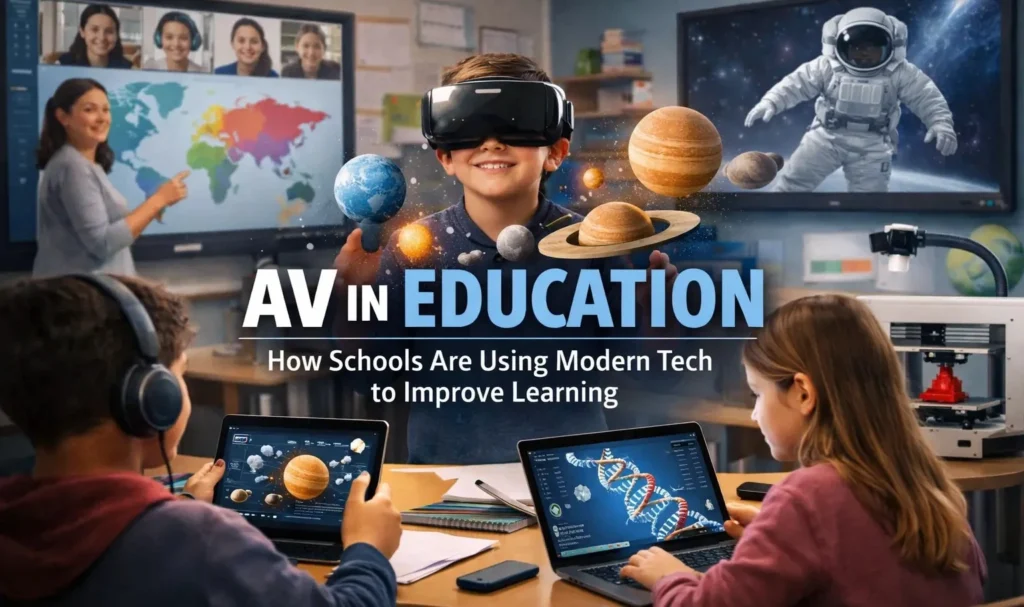
AV in Education
The classroom is no longer defined by chalkboards and textbooks. AV in education offers dynamic, multisensory experiences that traditional methods cannot.
Interactive AV technologies make learning more immersive, connect students and teachers in real time, support hybrid learning, & enable collaborative projects that go beyond static materials. As technology advances, AV stands out by making learning more engaging, accessible, & effective for diverse needs.
What is AV in Education?
AV in education refers to the integration of audiovisual technologies into educational institutions to enhance teaching, communication, & collaboration. Unlike traditional teaching methods, audiovisual education uniquely engages multiple senses, enhancing both comprehension and retention of complex materials. Modern audiovisual technologies provide dynamic learning experiences, such as videos & live demonstrations, that cannot be achieved using conventional methods alone.
Quick FAQs
How do AV systems improve classrooms?
AV systems enhance lessons with visuals, sound, and interactivity, making learning more engaging and easier to understand.
Are AV tools suitable for all students?
Yes, AV tools support diverse learners through features like subtitles, recordings, and assistive listening technologies.
The Role of Classroom AV Systems in Modern Learning
Classroom AV systems are transforming education by offering features that traditional teaching materials lack. These systems merge interactive displays, high-quality sound, & real-time video connection, creating an active, engaging environment that improves how lessons are delivered and received.
Key Components of Classroom AV Systems:
- Interactive whiteboards & touch screens
- High-end projectors and screens
- Audio systems for crisp audio
- Video conferencing systems
- Central control systems
With the right AV system, teachers can deliver lessons effectively. Students stay engaged through visual & auditory stimulation.
In addition, audiovisual systems can assist in accessibility through subtitles, recorded lectures, & assistive listening devices. In such cases, schools may require an audiovisual specialist to provide appropriate solutions.
How AV Enhances Collaboration and Communication?
One of the most significant advantages of AV in education is its unique ability to foster real-time collaboration & communication. Unlike static resources, AV allows students, teachers, and administrators to interact actively and share instant feedback in ways not possible before.
1. Improved Student Engagement
Students engage more effectively when lessons include multimedia presentations, interactive visuals, and sound elements, making learning dynamic, interesting, & easier to understand while encouraging participation and attention in classrooms.
2. Seamless Hybrid Learning
Modern audiovisual tools enable real-time connections between in-class and remote learners, ensuring continuous education, equal participation, & smooth communication for students regardless of physical location or learning environment.
3. Improved Collaboration
Audiovisual education tools allow teachers and students to share ideas, conduct virtual meetings, collaborate on projects, & communicate effectively, fostering teamwork and improving overall learning outcomes in modern classrooms.
4. Enhanced Presentations
Audiovisual tools improve presentations by delivering clear visuals, quality sound, & interactive elements, helping educators convey ideas effectively while keeping audiences engaged during classroom sessions, meetings, and training programs.
Wainhouse Research reports that 75% of businesses experience increased productivity with modern audiovisual tools, & educational institutions benefit from improved communication, streamlined collaboration, and enhanced learning experiences.
Quick FAQs
Can AV support hybrid learning?
Yes, AV systems connect in-class and remote students in real time, ensuring seamless hybrid learning experiences.
What equipment is included in classroom AV systems?
Typical systems include interactive boards, projectors, audio systems, video conferencing tools, and control systems.
AV in Training and Administrative Spaces
AV plays a vital role in training rooms, auditoriums, & administrative offices beyond the classroom.
Applications in Training
- Staff development sessions with interactive presentations.
- Virtual workshops and webinars.
- Real-time collaboration with external experts.
Boardroom and Meeting Enhancements
Modern AV solutions are also transforming meetings & internal communications within educational institutions, making them more productive and efficient. These advancements demonstrate how AV supports not only learning but also organizational effectiveness.
Benefits
- Clear communication through advanced audio setups.
- Professional presentations using high-resolution displays.
- Easy connectivity for remote participants.
Various institutions partner with audiovisual companies to implement effective solutions. These providers offer design, installation, maintenance, & training, ensuring all spaces are well-equipped for effective communication.
Key Benefits of Audiovisual Education
1. Increased Student Engagement
Interactive media are designed to engage learners. Audiovisual education uses images, sound, & motion to make learning enjoyable and easier for learners.
2. Better Knowledge Retention
Learning is often easier for learners, as most people remember information better when it is delivered through a combination of media. Audiovisual education in the classroom helps learners retain information more effectively.
3. Improved Accessibility
Modern audiovisual tools include subtitles, recording, and accessibility features, helping all students participate.
4. Enhanced Collaboration
Audiovisual tools help learners and teachers collaborate in person or remotely.
5. Professional Learning Environment
A quality audiovisual system creates a professional, modern learning environment that prepares learners for today’s world.
Choosing the Right Audio Visual Partner
The right partner is essential for successful AV integration in education.
What to Look For?
- Experience in educational projects.
- Comprehensive audiovisual services.
- Custom solutions for your educational institution.
- Ongoing support & maintenance.
Reputable audiovisual companies understand educational needs. They provide comprehensive consultation, installation, & maintenance.
AV Trends Shaping the Future of Education
Innovation and learning needs drive the future of AV in education.
Emerging Trends
- AI-powered learning tools
- Virtual and augmented reality experiences
- Cloud-based audiovisual systems
- Advanced analytics for performance tracking
These trends are redefining audiovisual education, making it more personalized & data-driven. With smart technology adoption on the rise, particularly in regions like Southern California, schools are implementing cutting-edge AV solutions. This momentum underscores the ongoing importance of finding the right audiovisual partners.
As technology continues to advance, educational institutions will rely even more on audiovisual services to deliver effective instruction & administrative support.
Get Audio Visual Services Near You
AV in education has become essential for creating engaging, efficient, and future-ready learning spaces. Implementing these systems in classrooms, training rooms, & offices revolutionizes teaching practices. By making strategic AV investments with experienced providers, institutions can increase collaboration, communication, and overall success.
Upgrade your learning environment with advanced AV technology. Circle MSP provides audiovisual installation near you to meet your needs. Contact us to transform classrooms, meeting rooms, and training spaces.
Frequently Asked Questions
Why is audiovisual education important?
Audiovisual education engages multiple senses, making lessons more interactive, improving comprehension, & increasing student participation.
What does an audiovisual specialist do?
An audiovisual specialist assesses needs, recommends solutions, installs systems, & ensures smooth operation of AV technology.
Can AV systems be customized?
Yes, AV systems can be customized based on classroom size, teaching style, and institutional requirements.
What is cloud-based AV technology?
Cloud-based AV allows remote access & management of systems, making it easier to control and update content.
What is the lifespan of AV systems?
With proper maintenance, AV systems can last 5–10 years or more, depending on usage and quality.