
5 Key Takeaways
- Layered security strengthens protection by combining multiple defenses across networks, devices, and identities.
- Firewalls alone cannot block phishing, ransomware, and insider threats targeting small businesses.
- Defense in depth reduces risk by providing backup safeguards when one security layer fails.
- Regulatory compliance now requires multi-layer protection, monitoring, reporting, and strong access controls.
- Outsourced cybersecurity provides affordable 24/7 monitoring without the cost of hiring expensive in-house security teams.
Layered Security is Essential in 2026
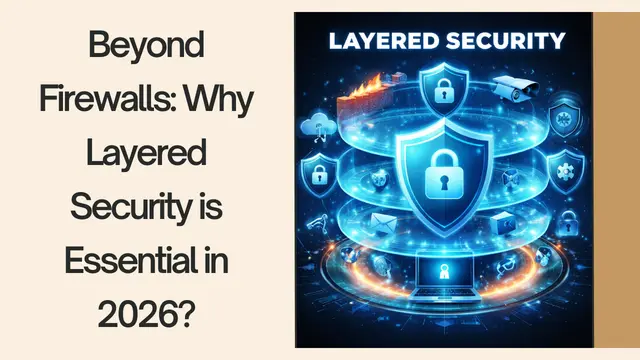
In 2026, cyber threats in Southern California are escalating, making a single line of defense obsolete for businesses. Traditional firewalls are inadequate, prompting the adoption of layered security rooted in a defense-in-depth strategy. This approach ensures that a breach of one barrier does not expose the entire system. As phishing, ransomware, credential theft, and insider misuse grow in scale and sophistication, organizations face mounting pressure to strengthen their defenses. Combined with strict regulations, multi-layered protection is now critical for business continuity.
The Rising Threat Landscape in 2026
Cybercriminals now use automation, AI-driven exploits, and sophisticated social engineering. These tactics mimic trusted companies, breach accounts, and infiltrate networks unnoticed. Businesses must use layered defenses to detect threats at every stage of an attack.
Key Characteristics of Modern Attacks:
- AI-generated phishing emails and spoofed websites
- Automated vulnerability scanning across networks
- Deepfake voice calls are used for fraud and approvals.
- Malware designed to hide inside encrypted traffic.
- Credential harvesting through fake login portals
- Lateral movement attacks inside compromised networks
Small Businesses Are the New Prime Targets
Small organizations in Southern California face greater risk because attackers view them as easy, fast targets. Limited security budgets, outdated tools, and a lack of trained specialists create openings. With 43% of cyberattacks targeting small businesses and only 14% of small businesses prepared, layered protection is critical.
Why Small Businesses Are Targeted:
- Often rely on a single firewall or basic antivirus.
- Use outdated operating systems or unpatched software.
- Lack 24/7 monitoring or intrusion detection
- Store valuable financial and customer data.
- Have a limited incident response capacity.
- They are more likely to pay a ransom due to downtime pressure.
Why Firewalls Alone Are Not Enough in 2026?
Firewalls are essential, but can’t guard against today’s diverse attacks. Threats bypass perimeters via phishing, remote devices, cloud connections, and insider misuse. Layered security monitors, verifies, and protects each access point, device, and connection.
Weaknesses of Relying Only on Firewalls:
- Cannot block phishing attacks delivered by email
- Do not monitor user behavior or suspicious login patterns.
- Cannot prevent ransomware distributed via cloud sharing
- Do not stop unauthorized access from stolen credentials.
- Cannot inspect remote devices connecting from outside the network
- Fail to detect internal misuse or intentional data theft.
Understanding Layered Security and Defense in Depth
Layered security overlaps defenses to protect networks, devices, identities, applications, and data. This structure provides checkpoints at every entry. If one layer is bypassed, others detect or contain threats, ensuring resilience and true defense-in-depth.
Core Layers of a Modern Security Strategy:
- Email filtering and phishing protection
- Endpoint detection and response (EDR)
- Multi-factor authentication (MFA)
- Zero-trust access controls
- Cloud application security and monitoring
- Network intrusion detection systems
- Privileged access management
- Backup, encryption, and disaster recovery safeguards
Real-World Threats: Layered Security Helps Prevent
Phishing is the most common attack, now powered by AI and convincing impersonation. Since employees are often the weakest link, layered security—email scanning, URL filtering, attachment sandboxing, and MFA—blocks threats even when users click mistakenly.
How Layers Mitigate Phishing Risks:
- Spam and phishing filters block suspicious emails.
- Real-time link scanning detects malicious URLs.
- Sandboxing prevents harmful attachments from executing.
- MFA stops unauthorized login attempts
- Behavioral analysis flags unusual access patterns
- Training programs teach employees to spot red flags.
Ransomware Attacks
Ransomware has grown more damaging, using double-extortion tactics that encrypt, steal, and lock data. Layered defenses cut exposure by blocking malicious downloads, detecting abnormal file behavior, isolating infected devices, and ensuring secure backups for recovery without paying attackers.
Layers That Protect Against Ransomware:
- EDR tools detect unusual file encryption activity
- Network monitoring stops lateral movement.
- Application whitelisting blocks unauthorized programs.
- Segregated backups prevent corruption or deletion.
- Zero-trust policies limit access privileges.
- Continuous patching reduces exploitable vulnerabilities.
Regulatory Pressure and Compliance Obligations
Regulatory frameworks such as HIPAA, PCI-DSS, CMMC, and state privacy laws require multiple safeguards to protect sensitive information. A single firewall cannot meet these expectations. Layered security provides the documentation, monitoring, reporting, and access controls needed to stay compliant and avoid penalties.
Compliance Elements Enabled by Layered Security:
- Detailed activity logs and access records.
- Continuous monitoring and threat alerts.
- Enforced authentication and verification controls.
- Data encryption at rest and in transit.
- Documented incident response procedures.
- Regular vulnerability scanning and audits.
Outsourcing Security: 24/7 Protection Without an In-House Team
Building an in-house cybersecurity team is costly and difficult due to talent constraints. Outsourcing provides access to a staffed security operations center (SOC) that monitors threats around the clock, delivering expertise and rapid response without the need for full-time hires. time hires.
Benefits of Outsourced Layered Security:
- 24/7 monitoring and instant threat response.
- Lower operational costs compared to internal hiring.
- Access to enterprise-grade security tools.
- Faster detection and containment of threats.
- Regular updates, patching, and system maintenance.
Compliance reporting and documentation in cybersecurity in 2026 demands more than firewalls. firewalls. Layered defense provides resilience across networks, devices, identities, and clouds. With rising phishing and ransomware threats and regulatory pressure, Southern California businesses must adopt multi-layered protection to reduce risk and maintain operational continuity.
Speak With the Experts at Circle
If you’re unsure whether your business has the right security layers in place, act now.ct now. Speak to Circle MSP’s experts for a full security assessment, identification of vulnerabilities, and guidance on building strong, 24/7 layered protection without hiring in-house.
Frequently Asked Questions
What is layered security?
Layered security combines multiple protection levels, ensuring that if one control fails, additional defenses still prevent attackers from breaching sensitive systems.
Why are firewalls alone insufficient today?
Modern attacks bypass firewalls using phishing, cloud threats, stolen credentials, and remote access, requiring additional security layers for complete protection.
Why do businesses need 24/7 monitoring?
Cyberattacks can occur at any time, so continuous monitoring ensures immediate detection, rapid response, and minimized downtime or financial loss following incidents.
How do backups protect against cyberattacks?
Backups ensure critical data remains recoverable even after ransomware, hardware failures, or accidental deletions disrupt normal business operations.
Why is continuous improvement necessary in cybersecurity?
Cybersecurity evolves constantly, requiring ongoing updates, monitoring, and policy improvements to stay ahead of new threats and emerging attack techniques.
How much does layered security typically cost?
Layered security costs vary by business size, but most companies spend monthly on monitoring, protection tools, and support to avoid the costs of breach recovery.